Learning how to meditate for spiritual awakening offers a profound path toward inner growth and self-discovery. This practice has been embraced across cultures and spiritual traditions, serving as a gateway to higher consciousness and deeper understanding of oneself and the universe. By cultivating mindfulness, clarity, and inner peace through meditation, individuals can experience transformative shifts that foster spiritual awakening and personal development.
This guide explores the essential steps to prepare for effective meditation, various techniques suited for deepening your spiritual journey, and how to recognize and integrate awakening experiences into daily life. Whether you are a beginner or seeking to enhance your existing practice, these insights will support you in navigating the path toward spiritual enlightenment with confidence and serenity.
Understanding Meditation for Spiritual Awakening

Meditation has long been recognized as a powerful practice that facilitates spiritual growth and self-awareness. It serves as a bridge connecting the individual consciousness with higher states of awareness, leading to profound insights and inner transformation. Engaging in meditation can help individuals access deeper layers of their mind, cultivate inner peace, and foster a sense of unity with the universe.
Throughout history, diverse cultures and spiritual traditions have employed meditation techniques as tools for awakening and enlightenment. The purpose of these practices varies, but they generally aim to transcend ordinary perception, dissolve mental barriers, and access higher states of consciousness. The following overview explores various meditation methods across different traditions, highlighting their unique features and objectives.
Historical and Cultural Origins of Meditation Practices
Meditation practices have origins tracing back thousands of years and are found in numerous ancient civilizations. In India, meditation is integral to Hinduism and Buddhism, with roots in Vedic traditions dating back as early as 1500 BCE. The practice was later refined within Buddhist monasteries, emphasizing mindfulness and compassion. Similar practices emerged in Taoism in China, focusing on harmony with nature and inner alchemy.
In the Western world, meditation gained prominence in the 20th century through spiritual movements, integrating concepts from Eastern philosophies. The adoption of meditation in contemporary contexts often combines traditional techniques with modern psychological approaches, aiming to enhance mental clarity and emotional well-being while fostering spiritual awakening.
Comparative Overview of Meditation Methods Across Spiritual Traditions
Different spiritual traditions utilize distinct meditation techniques, each with specific aims and key features. The following table provides a clear comparison of some prominent practices:
| Tradition | Technique | Purpose | Key Features |
|---|---|---|---|
| Hinduism | Mantra Meditation | Achieve spiritual union and self-realization | Chanting sacred sounds or phrases, focus on vibration and sound resonance |
| Buddhism | Vipassana (Mindfulness Meditation) | Develop insight into the nature of reality, attain enlightenment | Observing breath and bodily sensations, cultivating non-attachment |
| Zen Buddhism | Zazen (Seated Meditation) | Realize one’s true nature, attain awakening | Sitting in specific postures, focusing on breath or koans (riddles) |
| Taoism | Qigong and Meditation | Balance vital life energy (Qi), harmonize with nature | Gentle movements, visualization, breathing techniques |
| Sufism | Whirling Meditation / Dhikr | Achieve divine presence, cultivate love for God | Recitation of divine names, rhythmic spinning or breathing focus |
| Western Mysticism | Contemplative Prayer | Union with the divine, inner peace | Silent reflection, focus on divine attributes or scripture |
“Different traditions offer varied paths, but all aim at awakening the inner consciousness and transcending ego-bound perceptions.”
Techniques for Deep Meditation for Awakening
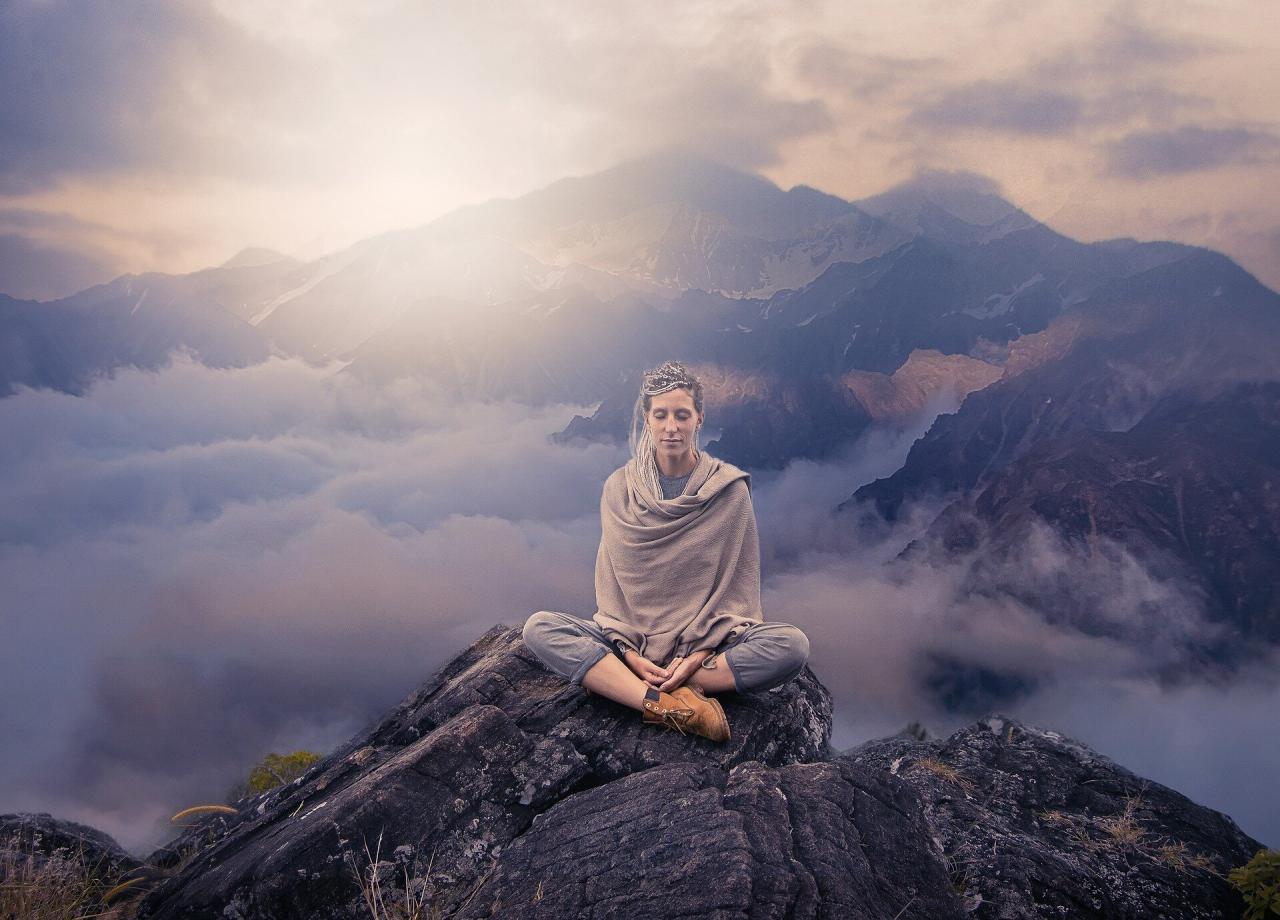
Engaging in deep meditation practices can significantly enhance one’s journey toward spiritual awakening. These techniques facilitate profound states of consciousness, enabling individuals to access higher levels of insight, inner peace, and spiritual clarity. Mastery of various methods allows practitioners to tailor their meditation to suit their evolving spiritual needs and deepen their experience over time.
Below are detailed approaches and structured techniques designed to foster deep meditative states conducive to awakening. Each method emphasizes mindfulness, focus, and intentionality, guiding practitioners toward greater self-awareness and spiritual insight.
Mindfulness Meditation Emphasizing Present-Moment Awareness
Mindfulness meditation is a foundational practice that cultivates awareness of the present moment without judgment. It sharpens the practitioner’s ability to observe thoughts, sensations, and emotions as they arise, fostering a state of open acceptance that opens pathways to spiritual awakening.
- Find a quiet, comfortable environment where interruptions are minimized. Sit with a straight spine to promote alertness and relaxation.
- Close your eyes gently or soften your gaze, and bring your attention to your breath. Notice the natural rhythm of inhalation and exhalation without attempting to control it.
- As thoughts, sensations, or feelings surface, acknowledge them without judgment and gently redirect your focus back to your breath or the present moment.
- Develop an attitude of curiosity and acceptance toward whatever arises, fostering a non-reactive awareness that deepens your connection to the present.
- Practicing daily for 10–20 minutes can significantly enhance your capacity for mindfulness and facilitate spiritual insights over time.
Guided Visualization for Spiritual Insight
Guided visualization is a powerful technique that uses mental imagery to access subconscious insights and foster spiritual awakening. It involves imagining a serene scene or symbolic journey that serves as a mirror for inner truths and higher knowledge.
Follow this structured procedure to facilitate deep visualization:
- Begin by sitting comfortably in a quiet space, closing your eyes, and taking several deep, calming breaths to center yourself.
- Imagine yourself in a peaceful, sacred place—a lush forest, a tranquil lake, or an ancient temple—where you feel safe and open to spiritual exploration.
- Visualize a pathway within this setting leading to a specific destination, such as a luminous altar or a wise spiritual guide.
- As you walk along this path, pay attention to the symbols, colors, and sensations that arise, as they often carry meaningful messages or insights.
- Approach the destination and engage with it—whether by receiving wisdom from a guide, observing a sacred object, or experiencing a transformative event.
- Allow the visualization to unfold naturally, observing any revelations or feelings that emerge, and then gradually return to your physical surroundings, carrying the insights gained.
Responsive Meditation Methods
Various meditation methods can be combined or adapted according to individual preference and spiritual goals. Below is a table organizing popular responsive techniques, their core focus, and procedural highlights:
| Method | Core Focus | Procedure |
|---|---|---|
| Mantra Repetition | Sound vibration and focus |
|
| Body Scan | Awareness of bodily sensations |
|
| Breath Focus | Centering attention on breathing |
|
Advanced Techniques for Spiritual Awakening
Advanced meditation methods are designed to transcend ordinary consciousness and facilitate profound spiritual experiences. These practices often require guidance or prior familiarity, but their systematic application can unlock heightened states of awakening.
Transcendental Meditation: This technique involves the silent repetition of a specific mantra assigned by a trained instructor, enabling the practitioner to reach a state of pure awareness beyond thought.
Transcendental Meditation Step-by-Step
- Learn from a certified instructor to receive your personal mantra tailored to your temperament and needs.
- Sit comfortably with eyes closed, and silently repeat your mantra in your mind, allowing it to settle naturally into your awareness.
- When you notice your mind wandering, gently bring your focus back to the mantra without effort or judgment.
- Practice twice daily for 20 minutes each session to achieve a state of restful alertness conducive to awakening.
Chakra Activation: This involves focused meditation on the body’s energy centers, or chakras, to awaken higher consciousness and spiritual energy.
Chakra Activation Step-by-Step
- Begin by sitting comfortably in a quiet space, closing your eyes and taking deep, calming breaths.
- Visualize each chakra as a spinning wheel of energy along the spine, starting from the base (Muladhara) ascending to the crown (Sahasrara).
- Focus your attention on each chakra sequentially, imagining its color, location, and energy flow, while silently affirming its activation (e.g., “I activate my root chakra”).
- Use breath and visualization techniques to energize each center, progressing upward until you reach the crown chakra, where spiritual awakening is initiated.
Recognizing Signs of Spiritual Awakening During Meditation

Embarking on a meditation journey often leads to profound shifts in perception, energy, and consciousness. Recognizing the subtle and not-so-subtle signs of spiritual awakening during meditation sessions can deepen your understanding of your progress and encourage continued practice. These signs may appear as physical sensations, emotional transformations, or mental insights that signal a move toward higher awareness and spiritual growth.
Being attentive to these indicators enables practitioners to differentiate between superficial relaxation and genuine breakthroughs, fostering a more authentic spiritual journey.
As you meditate regularly, awareness of these signs can serve as affirmation that your practice is aligning with your spiritual evolution. While experiences vary individually, certain common markers can be identified that highlight an awakening process unfolding within your meditation sessions. Learning to discern these signs helps in cultivating patience, humility, and consistency on the path toward spiritual realization.
Physical, Emotional, and Mental Sensations Indicative of Awakening Experiences
During meditation, heightened awareness and inner shifts often manifest through various sensations across the physical, emotional, and mental planes. Recognizing these sensations can provide valuable insight into your spiritual progress.
- Physical sensations: Feelings of warmth, tingling, or energy pulsations in the body, especially along the spine or crown chakra, are common. Some practitioners experience spontaneous muscle movements or a sense of lightness and expansion.
- Emotional experiences: Sudden bursts of joy, compassion, or feelings of deep peace may emerge unexpectedly. Conversely, emotional releases, such as crying or a sense of relief, can indicate emotional purification.
- Mental sensations: Increased mental clarity, a sense of stillness, or the emergence of profound insights and truths. Some may experience a dissolution of mental chatter, leading to a state of pure awareness.
These sensations often fluctuate and can be experienced intermittently, serving as markers of inner shifts. They are signs that your inner energy is awakening and that you are progressing along your spiritual path.
Common Shifts in Perception, Consciousness, or Energy Levels to Observe
During meditation, subtle yet significant changes in perception often signal a spiritual awakening. Recognizing these shifts helps practitioners stay mindful of their evolving state of consciousness.
- Altered perception of time and space: Time may seem to slow down, speed up, or lose significance altogether. Spatial boundaries can feel less defined, creating a sense of oneness with surroundings.
- Expanded consciousness: An increased awareness of the interconnectedness of all life, leading to feelings of unity and divine presence. This often brings a sense of being part of a larger cosmic whole.
- Energy surges or movements: Noticeable upticks in internal energy, often experienced as vibrations, waves, or flows of light through the body. These surges can feel invigorating or overwhelming, indicating awakening energy.
Such shifts commonly accompany spiritual breakthroughs and can occur spontaneously or gradually. They reflect a rising of consciousness beyond ordinary perception, opening pathways to higher states of awareness.
Distinguishing Superficial Relaxation from Genuine Spiritual Breakthroughs
While relaxation is an integral aspect of meditation, not every relaxed state signifies a spiritual breakthrough. Differentiating superficial calmness from authentic awakening experiences requires attentive discernment.
Superficial relaxation often involves a temporary state of calmness that may be purely physical and easily reversible. In contrast, genuine spiritual breakthroughs tend to have lasting effects on perception, energy, and consciousness, often accompanied by noticeable inner shifts and insights.
“Relaxation is the foundation; awakening is the elevation.”
Indicators of authentic breakthroughs include feelings of expanded awareness, profound peace, or clarity that persists beyond the meditation session. Emotional or mental shifts that lead to insight, compassion, or unity with all phenomena also point toward genuine awakening. Conversely, fleeting sensations of calm without deeper internal shifts usually reflect temporary relaxation rather than true spiritual progress.
Practitioners are encouraged to observe the consistency and depth of these signs over multiple sessions, fostering patience and mindful awareness as authentic growth unfolds gradually.
Markers of Spiritual Awakening to Observe During Practice
Here are key markers that can serve as tangible indicators of spiritual awakening within your meditation practice:
- Persistent feelings of inner peace: A sustained sense of calmness and contentment that extends beyond meditation sessions.
- Heightened intuition: Increased ability to perceive truths or insights intuitively without reliance on logic.
- Sense of interconnectedness: Feeling deeply connected to all living beings and the universe.
- Energy shifts: Spontaneous movements or vibrations within the body, especially along energy centers.
- Altered states of consciousness: Experiences of transcendence, timelessness, or unity consciousness.
- Emotional releases and healing: Sudden emotional catharsis or feelings of forgiveness and compassion.
- Increased awareness of subtle energies: Recognizing energies in oneself and others, often described as a tingling or buzzing sensation.
By attentively observing these markers, practitioners can better gauge their progress, deepen their meditation, and foster a more conscious engagement with their awakening process.
Integrating Spiritual Awakening into Daily Life

Maintaining the insights and awareness gained through meditation and spiritual practice beyond formal sessions is essential for cultivating a consistent sense of awakening. Embedding spiritual principles into everyday activities transforms routine experiences into opportunities for growth, mindfulness, and deeper understanding. This integration helps sustain the momentum of spiritual awakening, fostering a more harmonious and conscious approach to life.Consistent application of spiritual awareness throughout daily life ensures that the transformative effects of meditation extend into relationships, work, and personal decisions.
By consciously aligning actions with spiritual insights, individuals can experience a profound sense of interconnectedness, compassion, and purpose, which reinforces ongoing spiritual development and inner peace.
Methods for Maintaining Awareness and Mindfulness Outside Formal Sessions
Practicing mindfulness and awareness consistently throughout the day can significantly deepen spiritual awakening. Here are practical methods to incorporate into daily routines:
- Intentional Breathing Breaks: Periodically pause to take deep, conscious breaths, focusing on the inhalation and exhalation to reconnect with the present moment. This helps reduce stress and center your awareness amidst busy schedules.
- Mindful Movement: Engage in activities such as walking, stretching, or even simple chores with full attention. Notice sensations, sounds, and surroundings to cultivate mindfulness in everyday actions.
- Pause Before Reacting: When faced with challenges or emotional triggers, take a moment to observe your thoughts and feelings before responding. This practice promotes conscious decision-making rooted in compassion and understanding.
- Setting Reminders: Use alarms, sticky notes, or mobile notifications with affirmations or mindful cues to gently prompt awareness throughout the day.
- Reflective Check-Ins: Allocate a few minutes at various points during the day to quietly assess your mental, emotional, and spiritual state, fostering ongoing self-awareness.
Incorporating Spiritual Principles into Daily Activities and Decisions
Living in alignment with spiritual principles enhances the transformative impact of awakening. Conscious integration of values such as compassion, honesty, patience, and gratitude guides everyday interactions and choices. Approaching life with these principles consciously embedded promotes harmony internally and externally.Consider the following practices to embed spiritual values into daily life:
- Practicing Compassion: Engage in acts of kindness, listen attentively during conversations, and offer support without expectation. Small gestures, such as helping a colleague or volunteering, reinforce a compassionate outlook.
- Honest Communication: Approach conversations with sincerity, refrain from gossip or deception, and express thoughts with clarity and kindness. This nurtures trust and authenticity.
- Patience and Acceptance: Cultivate patience during delays or conflicts, accepting situations beyond control with equanimity. This attitude reduces frustration and fosters inner peace.
- Gratitude Journaling: Regularly note aspects of life you appreciate, reinforcing a positive and humble perspective that aligns with spiritual humility and thankfulness.
- Mindful Decision-Making: When faced with choices, pause to consider how actions align with your spiritual values. Prioritize integrity and compassion in your decisions, even in challenging circumstances.
Reflection Exercises and Journaling for Deepening Ongoing Awakening
Engaging in regular reflection through journaling and exercises helps solidify insights gained during meditation and supports continuous growth. These practices promote clarity, self-awareness, and a deeper understanding of your spiritual journey.Suggested exercises include:
- Daily Reflection Journaling: Dedicate time each evening to writing about moments of mindfulness, emotions experienced, and insights gained. Focus on how your awareness influenced your reactions and decisions throughout the day.
- Gratitude and Compassion Lists: Create lists of people, experiences, or qualities you are grateful for, and reflect on how cultivating gratitude influences your perspective and interactions.
- Intention Setting: Begin each day by setting a conscious intention rooted in spiritual values, such as practicing patience or showing compassion. Review and reflect on how well you embodied this intention at day’s end.
- Questioning and Self-Inquiry: Write prompts such as “What past reactions were driven by ego, and how can I respond more consciously in the future?” or “In what ways did I experience interconnectedness today?” Use these questions to deepen self-awareness.
- Visualization and Future Self-Reflection: Visualize your ideal aligned self practicing compassion and patience in various scenarios. Reflect on steps needed to embody that version of yourself more fully.
Implementing these practical methods fosters a seamless integration of spiritual awakening into everyday life, enabling ongoing growth, peace, and harmony beyond the meditation cushion.
Epilogue

Embarking on the journey of meditation for spiritual awakening is a rewarding endeavor that requires patience, dedication, and mindfulness. As you deepen your practice and integrate your insights into everyday life, you will gradually unlock a profound sense of purpose and inner harmony. Remember, each step brings you closer to realizing your true self and embracing the expansive consciousness that awaits.
Continue to explore, reflect, and nurture your spiritual growth with sincerity and openness.